

Navigating Your Career Path with Linux System Administration Certification
Linux system administration is a cornerstone of modern IT infrastructure. Whether it's managing servers, configuring networks, or ensuring data security, Linux administrators are at the heart of operations for countless enterprises. The Linux system administration certification is crucial for anyone looking to pursue a career in system administration or deepen their expertise in managing Linux-based systems.
This certification demonstrates that professionals have the skills to configure, manage, and troubleshoot Linux systems, all while adhering to industry best practices. As Linux continues to dominate the enterprise and cloud environments, obtaining this certification becomes a highly sought-after credential in today’s job market.
The Role of a Linux System Administrator
A Linux system administrator is responsible for managing the Linux environment, including installation, configuration, and maintenance of systems and applications. They ensure that the systems run smoothly and are secure, troubleshoot issues, and provide ongoing technical support. Additionally, they often automate repetitive tasks to improve efficiency and scalability.
Key responsibilities typically include:
System Configuration: Installing and configuring Linux systems for optimal performance.
Network Management: Setting up and maintaining network configurations to ensure secure and efficient communications.
Security Management: Implementing firewalls, managing permissions, and ensuring system security.
Backup and Recovery: Creating system backups and ensuring data is recoverable in case of failure.
These tasks require not just technical know-how, but also problem-solving skills and the ability to work efficiently in a fast-paced environment. The certification ensures that professionals are prepared for these complex and multifaceted tasks.
Why Pursue a Linux System Administration Certification?
With a rising demand for Linux professionals across various industries, a Linux system administration certification provides a clear path to enhancing your job prospects and earning potential. Linux-based systems are used by many tech giants like Google, Facebook, and Netflix, as well as numerous startups and enterprises. Having a certification shows employers that you have the knowledge and technical skills needed to manage these systems effectively.
Key benefits include:
Industry recognition: The certification is globally recognized and proves your proficiency in Linux administration.
Improved job prospects: As companies continue to adopt Linux systems, the demand for certified Linux administrators grows.
Higher earning potential: Certified professionals often command higher salaries due to their expertise in managing critical systems.
The demand for Linux professionals has only grown with the rise of cloud computing and open-source technologies. Gaining a certification demonstrates your ability to adapt to these rapidly evolving environments.
Core Skills Developed in Linux System Administration
Obtaining the Linux system administration certification helps you develop a wide range of skills required for managing Linux-based systems. Some of these skills include:
Command-line proficiency: Linux system administrators must be comfortable using the command line for a wide range of tasks.
Package management: Managing software packages and updates through package managers like apt, yum, and zypper.
User management: Creating and managing user accounts, file permissions, and ensuring security protocols are in place.
System troubleshooting: Diagnosing and fixing system issues using logs and diagnostic tools.
Network management: Configuring network interfaces, ensuring proper DNS and DHCP configuration, and securing network traffic.
Security measures: Setting up and maintaining firewalls, managing SSH access, and securing user permissions.
These skills are essential for anyone responsible for maintaining the integrity, performance, and security of a Linux-based environment.
Types of Linux System Administration Certifications
There are various Linux system administration certifications available, depending on your career goals and the depth of expertise you wish to attain. The most common certifications in the field include:
| Certification Level | Focus Area | Target Audience |
| Linux Essentials | Basic Linux skills and system operations | Beginners or those new to Linux administration |
| CompTIA Linux+ | General Linux system administration skills | Entry-level professionals |
| Red Hat Certified System Administrator (RHCSA) | Advanced Red Hat-specific Linux skills | Professionals looking for expertise in Red Hat Linux systems |
| LPIC-1 | Linux server administration skills | Broad certification across multiple Linux distributions |
These certifications help professionals align their skills with specific industry needs or Linux distributions.
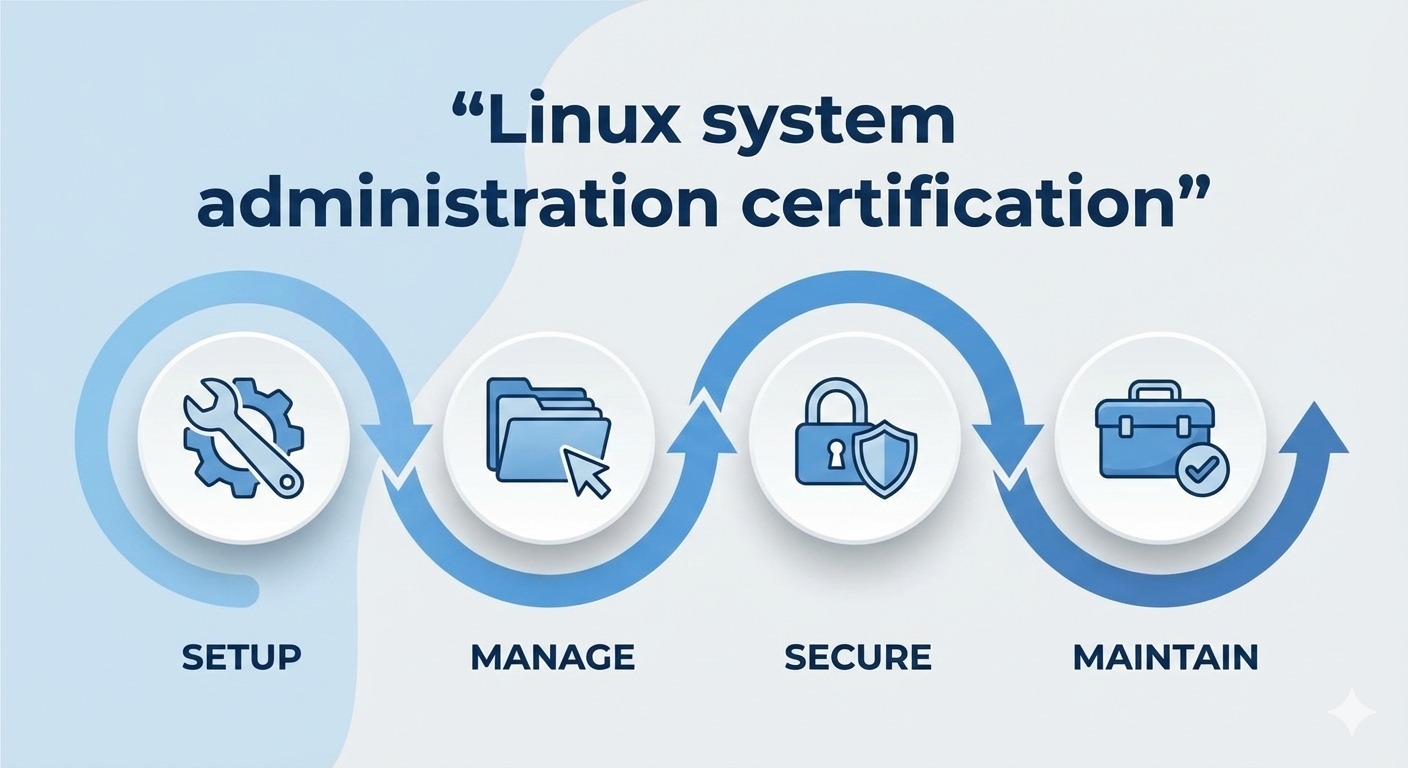
Job Roles for Linux System Administrators
Professionals with a Linux system administration certification have a wide range of career options available to them. Some of the most common roles include:
Linux System Administrator: Manage and support Linux servers and applications.
DevOps Engineer: Work in collaboration with development and operations teams to automate infrastructure.
Network Engineer: Configure and maintain network systems based on Linux.
Cloud Engineer: Manage cloud-based environments that run on Linux.
Security Engineer: Implement and monitor security measures for Linux-based systems.
Given Linux’s widespread use, Linux system administrators are often employed across diverse industries such as finance, technology, healthcare, and government.
Preparing for the Linux System Administration Exam
Preparation for the Linux system administration exam is crucial, as it tests practical and theoretical knowledge across various system management areas. To prepare effectively:
Gain hands-on experience: Setting up a Linux system and practicing tasks such as package installation, user management, and troubleshooting is essential.
Study available materials: Utilize textbooks, online courses, and practice exams to reinforce learning.
Join a community: Participating in Linux-focused forums or study groups can help expand your knowledge and answer lingering questions.
Practice is a critical component, as much of the exam requires applying knowledge in real-world scenarios. For a complete walkthrough, viewers may refer to Cert Empire’s YouTube video on this subject.
Key Challenges in Linux System Administration
Linux administration requires troubleshooting skills, a keen understanding of the system, and familiarity with various Linux distributions. Common challenges include:
System optimization: Ensuring Linux systems are configured for maximum efficiency and performance.
Security vulnerabilities: Regularly monitoring for potential threats and applying necessary security updates.
Configuration management: Automating system configurations and maintaining consistency across environments.
These challenges require problem-solving and deep understanding, which is why a certification can be incredibly valuable in preparing candidates for real-world environments.
Long-Term Value of Linux System Administration Certification
The Linux system administration certification is not just a short-term career booster, but a long-term asset that helps professionals remain competitive in the ever-evolving IT industry. By mastering Linux, professionals are better positioned to take on roles that require specialized knowledge in cloud, security, and enterprise-scale infrastructure.
With the growing adoption of open-source technologies and cloud computing, the long-term value of Linux system administration skills cannot be overstated. This certification opens doors to numerous opportunities and increases the professional’s adaptability to a wide range of industries and technologies. For an image-based breakdown, readers may review an earlier Instagram post by Cert Empire.
FAQs
What is Linux system administration certification? It’s a certification that validates your ability to configure, manage, and troubleshoot Linux systems in real-world environments.
Who should pursue a Linux system administration certification? IT professionals seeking to enhance their skills in managing Linux servers, networks, and security should pursue this certification.
What skills do you learn in a Linux system administration course? You’ll learn server management, system security, network configuration, automation, and troubleshooting techniques for Linux environments.
How long does it take to prepare for the Linux system administration exam? Preparation time depends on your experience level, but most candidates take 2–6 months of consistent study and practice.