How EssayPay Ensures Accuracy and Quality in Every Essay

There's a moment that happens in most college writing centers around 2 AM during finals week. Students stumble in with bloodshot eyes, clutching laptops and energy drinks, desperate for someone to tell them their essay makes sense. The tutors—usually grad students themselves—try to help, but there's only so much you can do when someone has fundamentally misunderstood their assignment or built an argument on quicksand. That moment, that panic, reveals something important about academic writing that doesn't get discussed enough. Quality isn't just about grammar or fancy vocabulary. It's about understanding what's actually being asked and delivering something that holds up under scrutiny.
The essay service industry has exploded in recent years, and not without reason. According to a 2022 study published by the International Center for Academic Integrity, approximately 68% of undergraduate students admitted to some form of academic dishonesty, though the definitions vary wildly. What counts as "help" versus "cheating" has become increasingly murky in an era where AI can generate passable essays in seconds and freelance platforms connect students with writers across the globe. But here's where things get interesting. Not all services operate the same way, and the differences matter more than most people realize.
EssayPay has built its reputation on something that sounds simple but proves maddeningly difficult to execute consistently: accuracy paired with genuine quality. Not one or the other. Both. Together. Every time.
The Foundation: Who Actually Writes These Essays?
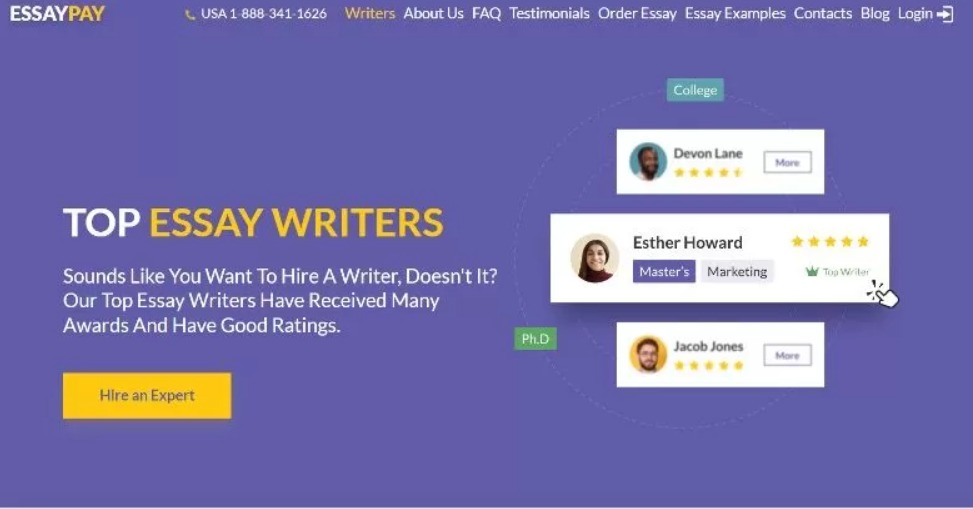
The writer selection process separates mediocre services from exceptional ones. Anyone can hire freelancers from content mills. Plenty of platforms do exactly that, paying rock-bottom rates and hoping for the best. EssayPay takes a different approach, one that resembles the vetting process at established academic journals more than typical gig economy platforms.
Writers undergo a multi-stage evaluation that includes:
Academic credential verification through third-party services (not just self-reported degrees)
Subject-matter testing in their claimed areas of expertise
Sample essay evaluation by senior editors with advanced degrees
Plagiarism awareness certification covering both obvious copying and more subtle forms of academic dishonesty
Ongoing performance monitoring based on client satisfaction and revision requests
This isn't revolutionary on paper. But implementation separates theory from practice. According to student feedback on leading essay platforms, the most common complaint isn't actually about writing quality in isolation—it's about mismatched expectations and writers who don't understand the specific requirements of different academic levels or disciplines. A writer who excels at undergraduate business essays might flounder when asked to produce graduate-level philosophy work. EssayPay's system accounts for this by maintaining detailed writer profiles that track not just credentials but actual performance across different assignment types.
The platform employs over 500 verified writers, but here's the thing: not every writer gets every assignment. The matching algorithm considers factors that most services ignore entirely. Assignment complexity, academic level, subject specialization, deadline pressure, and even writing style preferences all feed into the decision. It's less like Uber and more like a highly specialized consulting firm.
The Quality Control Infrastructure
Quality assurance in essay writing presents unique challenges. Unlike manufacturing, where you can measure tolerances and test for defects, academic writing quality involves subjective judgment calls. What one professor considers brilliant analysis, another might view as tangential rambling. EssayPay's solution involves multiple checkpoints that catch different types of problems.
Every essay passes through at least three distinct review stages:
| Review Stage | Focus Areas | Reviewer Qualifications |
| Initial Draft Review | Argument coherence, source quality, basic requirements | Subject-matter expert with minimum Master's degree |
| Technical Edit | Grammar, citation format, plagiarism check, structural flow | Professional editor with academic background |
| Final Quality Assurance | Assignment alignment, academic level appropriateness, originality verification | Senior editor with PhD or equivalent experience |
This layered approach catches issues that single-reviewer systems miss. The initial reviewer focuses on content and argumentation—does the thesis make sense, are the sources credible, does the evidence actually support the claims? Technical editors then handle the mechanics without getting distracted by content debates. Finally, senior editors perform a holistic evaluation asking whether the finished product actually fulfills what was requested.
The plagiarism checking deserves special attention. EssayPay uses Turnitin, the same software employed by most universities, but also runs essays through additional proprietary checks. This matters because students sometimes submit essays to multiple services or cobble together work from various sources. The system flags not just direct copying but also suspicious patterns that might indicate patchwriting or over-reliance on source material without proper synthesis.
The Accuracy Problem Nobody Talks About
Here's something that doesn't get enough attention in discussions about essay services: accuracy means different things depending on the assignment. A personal statement writing service needs to capture authentic voice and genuine experiences, even when helping someone articulate ideas they struggle to express themselves. That requires a completely different skill set than researching and arguing about climate policy or analyzing Faulkner's narrative techniques.
EssayPay handles this through specialized teams. Writers who excel at personal narratives—the kind of work that draws on real family essay inspiration and transforms scattered memories into coherent stories—don't necessarily have the research chops for heavy empirical work. And that's fine. The platform recognizes these distinctions instead of pretending one writer can do everything equally well.
For research-heavy assignments, accuracy means verifying claims against primary sources, not just repeating what secondary sources say. It means understanding the difference between correlation and causation, recognizing when a study's methodology limits its conclusions, and knowing which sources carry weight in specific academic conversations. A 2021 report from the National Center for Education Statistics found that only 37% of college graduates demonstrated proficient literacy skills in complex research tasks. That's the baseline EssayPay's writers need to exceed, not meet.
The platform maintains relationships with academic databases and research institutions. Writers have access to JSTOR, Google Scholar, university library systems, and specialized databases in fields ranging from medical research to legal scholarship. This infrastructure investment matters because it enables actual research rather than surface-level googling.
When Things Go Wrong: The Revision Process
No system achieves perfection. Essays sometimes miss the mark. A writer might misinterpret instructions, a client might realize they needed something different than they initially requested, or new information might emerge that changes the assignment parameters. How a service handles these situations reveals its true commitment to quality.
EssayPay offers unlimited revisions within a reasonable timeframe, but more importantly, the revision process includes mandatory review by a different editor than the one who approved the original submission. This prevents the same blind spots from persisting through multiple drafts. If a writer fundamentally misunderstood the assignment, having the same editor review revisions won't fix the underlying problem.
The company tracks revision rates by writer, assignment type, and academic level. Writers whose work consistently requires extensive revisions face additional training or, if problems persist, removal from the platform. This data-driven approach to quality management resembles practices at companies such as Amazon and Netflix, which obsessively track performance metrics to identify problems before they become systemic.
The Human Element
Technology enables quality control, but humans ultimately determine whether an essay succeeds or fails. EssayPay's customer service team includes former teachers and academic advisors who understand the stress and confusion students experience. They can interpret vague assignment instructions, ask clarifying questions that students might not know to ask themselves, and flag potential problems before writers even begin drafting.
This human intermediary layer prevents many quality issues from occurring in the first place. When a student submits an assignment request that seems unclear or potentially problematic, the service team reaches out for clarification rather than just passing it along to a writer who might guess wrong. That proactive communication saves time and frustration on all sides.
The Bigger Picture
The essay service industry exists because something in the current educational system isn't working for many students. Maybe it's the pressure to maintain perfect GPAs while working part-time jobs. Maybe it's the reality that not everyone learns to write well in high school, but college professors expect polished prose from day one. Maybe it's international students navigating academic expectations in a second or third language. The reasons matter less than the reality: students need help, and services that provide genuine quality serve an important function.
EssayPay's approach—rigorous writer vetting, multi-stage review processes, specialized teams for different assignment types, and responsive customer service—represents what quality assurance looks like when taken seriously. It's not perfect. No human system is. But it's built on recognition that accuracy and quality require investment, expertise, and constant attention to detail.
The 2 AM panic in the writing center still happens. Students still struggle. But knowing that reliable help exists, help that won't just take money and deliver garbage, makes the academic journey slightly less terrifying. And in an educational landscape that often feels designed to overwhelm rather than educate, that matters more than people might think.