

RealESALetter.com in New York:2026 ESA Letter Service Review
Living in New York City is an experience unlike any other. The energy is infectious, the pizza is unbeatable, and the skyline is a constant reminder that you made it to the center of the world. But let’s be honest—the concrete jungle can also be incredibly isolating and stressful. Between the hustle of the subway commute, the noise that never sleeps, and the sheer cost of living, my anxiety levels hit an all-time high this year. I realized that my mental health needed a stabilizing force, something more consistent than weekend yoga or occasional therapy sessions. That stabilizing force turned out to be my dog, but securing housing with him in a city notoriously strict about pets was a hurdle I wasn't prepared for. That is until I discovered the process of obtaining an ESA letter.
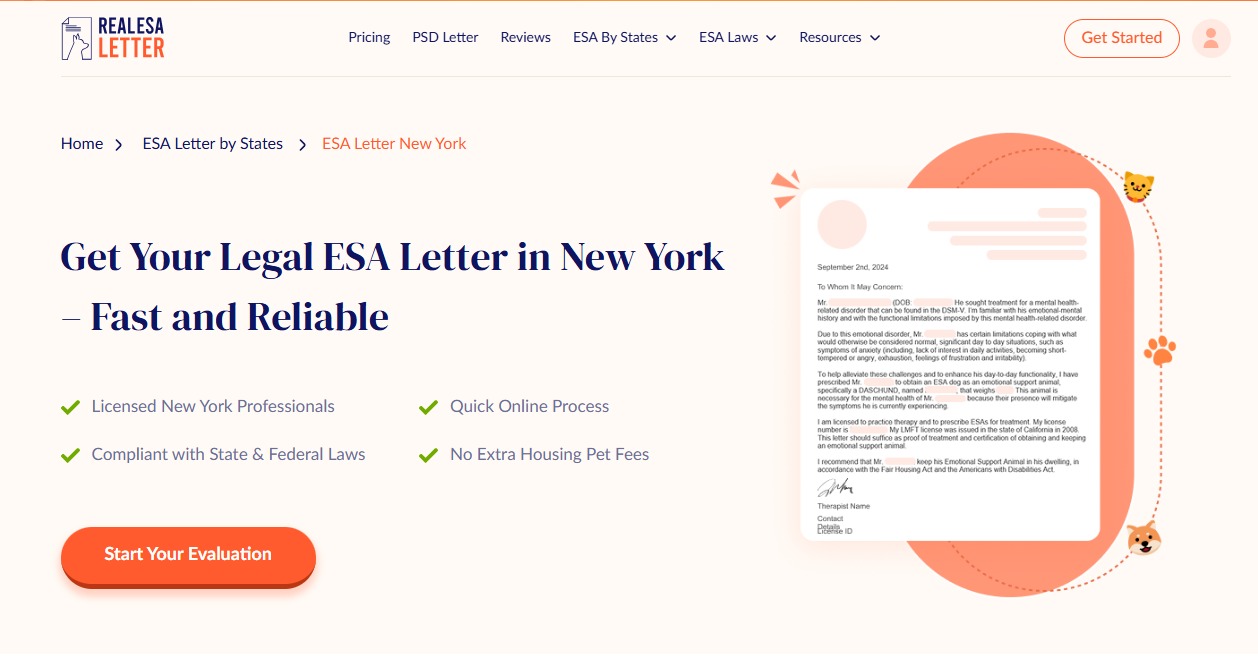
Finding a reliable service amidst the sea of internet scams was my top priority. I needed documentation that would stand up to the scrutiny of tough New York property management companies and co-op boards. My journey led me to RealESALetter.com, and my experience with them in 2026 has been nothing short of a relief. In this review, I want to share exactly how their service works for New Yorkers, why it’s a vital resource for tenants here, and how it helped me legally keep my companion by my side in an apartment that technically didn't allow pets.
The New York Rental Market and "No-Pet" Clauses
If you have ever hunted for an apartment in NYC, you know the struggle. You find a place with decent rent and a window that faces actual sunlight, only to see the dreaded words: "No Pets." For someone like me, for whom a pet isn't just a hobby but a mental health necessity, this is devastating. New York State and City human rights laws, alongside federal guidelines, protect tenants with disabilities, but landlords here are savvy. They know the law, and they know how to spot a fake document a mile away.
I knew I couldn't just download a template. I needed a legitimate ESA Letter New York landlords would recognize as valid medical documentation. This specific state focus was crucial because New York has some of the strongest tenant protections, but also strict requirements for authenticity. RealESALetter.com connected me with a licensed mental health professional (LMHP) licensed to practice in New York, which is the golden ticket for validity here.
Why I Chose RealESALetter.com
Before committing, I did my homework. I was skeptical of any service that promised "instant" results because I know that real healthcare takes time, even if it is just a few hours. I read a detailed RealESALetter Review that highlighted their compliance with HIPAA laws and their network of board-certified professionals. That review gave me the confidence that I wasn't dealing with a "certificate mill" but a telemedicine platform designed to bridge the gap between patients and providers.
I also spent a considerable amount of time reading guides on How to Get a Legal ESA Letter for Dog in 2026 to ensure I understood every step of the compliance process. The consensus was clear: you must have a live interaction (remote or in-person) with a licensed professional. RealESALetter.com facilitates this exact process. The interface was clean and easy to navigate on my phone, which is essential when you are trying to handle life on the go. The questionnaire asked relevant questions about my emotional well-being, my history with anxiety, and how my animal assists me. It felt like a genuine intake form at a doctor's office, not just a checkout page.
Busting the Registration Myth
One of the most confusing things for New York pet owners is the difference between a letter and a registration. I have seen so many neighbors walking their dogs with official-looking vests and ID cards, claiming that their dog is "registered." During my consultation, the therapist clarified this for me. There is no such thing as an official government registry for ESAs.
I learned that Emotional Support Dog Certification sites that sell you a badge or a spot on a database are often selling you snake oil. The only thing that grants you legal rights under the Fair Housing Act is the letter written by the LMHP. RealESALetter.com didn't try to upsell me on useless vests or certificates. They focused entirely on the medical necessity and the legal letter, which built a lot of trust.
Living in Tight Quarters: The Allergy Factor
New York apartments are often small, and ventilation can be a luxury. I live in a pre-war building in Brooklyn with shared hallways and neighbors in close proximity. One of my landlord's concerns was allergies. While an ESA letter overrides a "no pets" policy, it helps to be considerate of the shared environment.
I spent time researching Hypoallergenic Dog Breeds That Don’t Shed to ensure that my presence in the building wouldn't be a burden to others. Having a Poodle mix has been a blessing because it minimized the "dander defense" that some landlords try to use to deny accommodation requests. While the law is on your side regardless of the breed (unless it poses a direct threat or undue administrative burden), showing that you have a hypoallergenic animal can smooth over tensions with wary property managers.
It's Not Just About Dogs
While I am a dog person, the beauty of the ESA regulations is that they cover a wide variety of animals. In a city like New York, where walking a dog three times a day in winter slush can be daunting, many people opt for indoor companions. I have a friend in Queens who utilizes the same protections for her rabbit.
The platform educates you on the Types of ESA Animals that qualify. Basically, if the animal provides comfort and support that alleviates your symptoms, it counts. You don't need a specially trained Golden Retriever. A guinea pig, a bird, or a cat can be just as effective for someone struggling with depression or loneliness. The therapist I spoke with understood this bond deeply and didn't trivialize the support a non-canine animal provides.
The Cat Conundrum
Speaking of other animals, cats are practically the unofficial mascots of NYC bodegas and apartments. For many, a cat is the perfect low-maintenance companion for a busy urban lifestyle. However, selecting the right feline friend matters. I found myself reading about Cat Breeds – Different Types and Interesting Facts to understand the temperaments of different cats for a friend who was also applying for an ESA letter.
Some breeds, like Ragdolls or Maine Coons, are known for their dog-like affection, which can be crucial for emotional support. My friend used RealESALetter.com to secure housing for her Siamese, and the process was just as smooth as it was for my dog. It reinforced that the service is versatile and caters to the specific needs of the patient, not just a generic template.
Moving Across the Hudson
Life in the tri-state area often involves moving between states. I have been considering a move across the Hudson River for cheaper rent and more space. A major concern was whether my documentation would hold up if I crossed state lines. Since RealESALetter.com operates nationwide, they can connect you with professionals licensed in multiple jurisdictions.
I looked into getting an ESA Letter New Jersey landlords would accept, just to be prepared. Knowing that I can easily update my file or get a renewed recommendation valid for New Jersey through the same portal is a huge relief. It means I don't have to start from scratch with a new doctor if I decide to commute from Jersey City or Hoboken. This portability is a massive benefit for anyone living in the fluid rental market of the metro area.
The Benefit of Professionalism in NYC
In New York, landlords are used to dealing with lawyers and contracts. If you hand them a handwritten note or a sketchy-looking printout, they will challenge it. The letter I received from RealESALetter.com was on official letterhead, included the therapist’s license number, the date, and their direct contact information for verification.
When I submitted it to my management company, I was nervous. Two days later, I received an email simply stating that the accommodation had been granted and the pet fee had been waived. There was no back-and-forth, no argument. The professionalism of the document spoke for itself. It saved me $50 a month in pet rent and a $500 deposit, but more importantly, it saved me the stress of a confrontation.
Handling the "Reasonable Accommodation" Request
RealESALetter.com also provided guidance on how to submit the letter. In New York, you request a "reasonable accommodation" for your disability. They advised me to submit the letter along with a polite written request to the landlord. This professional approach sets the right tone. You aren't demanding special treatment; you are asserting your legal rights under the Fair Housing Act.
I found that being transparent and having the solid backing of a reputable healthcare provider made me feel empowered. I wasn't trying to "sneak" a dog in; I was following the medical advice of a professional to manage my health condition.
The Importance of Annual Renewal
One detail that is easy to overlook in the fast-paced NY lifestyle is that these letters are not valid indefinitely. Most landlords require a letter dated within the last 12 months. My lease renews every August, and I have set a reminder to use the service for my renewal well in advance.
The continuity of care is important. By sticking with the same service, there is a record of my history and the ongoing need for my ESA. This consistency looks much better if the validity of your claim is ever questioned. It shows a pattern of responsible health management rather than a one-time attempt to skirt a rule.
Conclusion
Navigating mental health challenges in New York City is tough, but you don't have to do it alone. My emotional support animal has been a lifeline, keeping me grounded when the city feels overwhelming. RealESALetter.com provided the bridge I needed to ensure my housing rights were respected. Their service is fast, discreet, and most importantly, legally sound within the specific context of New York regulations.
If you are a New Yorker struggling with anxiety, depression, or PTSD, and you believe an animal could help, I highly recommend exploring this path. Don't let the fear of a "No Pets" sign deter you from getting the support you need. With the right documentation and a legitimate process, you can make this city a home for both you and your companion.
Frequently Asked Questions
1. Is an ESA Letter valid in New York City Co-ops?
Yes, the Fair Housing Act and New York State Human Rights Law apply to most housing providers, including Co-ops and Condos. Co-op boards are notorious for strict rules, but they cannot legally deny a reasonable accommodation request for a legitimate emotional support animal unless it poses an undue financial or administrative burden, which is rare for a standard household pet.
2. Can my landlord charge me a pet deposit in NYC if I have an ESA letter?
No. Under the law, an emotional support animal is not considered a "pet"; it is considered an assistance animal. Therefore, landlords cannot charge pet fees, pet rent, or demand a pet deposit. However, you are still financially responsible for any actual damage your animal causes to the apartment.
3. Does my ESA need to wear a vest in my apartment building?
No, there is no legal requirement for an ESA to wear a vest, tag, or harness. While some owners choose to use them to signal to neighbors that the animal is working or to avoid questions in the hallway, your landlord cannot demand that the animal wear specific gear.
4. Can I take my ESA on the NYC Subway?
Generally, no. The ESA letter grants rights for housing, not public transportation. The MTA has strict rules that animals must be in a container and not annoy other passengers. Unless your animal is a service animal (trained to perform a task), or a small animal in a carrier, having an ESA letter does not exempt you from subway rules.
5. What if my landlord asks for my medical records?
A landlord is not entitled to your full medical records or detailed diagnosis. They are only entitled to the ESA letter from a licensed mental health professional which confirms you have a disability and a disability-related need for the animal. RealESALetter.com ensures the letter provides exactly what is legally required without oversharing your private medical history.
6. How fast is the turnaround time for a New York ESA letter?
RealESALetter.com is known for efficiency. Once you complete the assessment and the licensed professional reviews and approves your case, you can often receive the digital copy of your letter within 24 to 48 hours. This is particularly helpful in the fast-moving NYC real estate market where you might need to sign a lease quickly.
7. Can a landlord deny my ESA if it is a "dangerous breed"?
Landlords cannot deny an ESA based solely on breed stereotypes (like Pit Bulls or Rottweilers). They can only deny the specific animal if they have evidence that the specific individual animal poses a direct threat to the health or safety of others that cannot be reduced or eliminated by another reasonable accommodation.