

The Complete Buying Guide to Bill Counter Machines: Everything You Need to Know Before You Buy
Introduction
In an increasingly digital world, cash transactions remain a fundamental part of business operations across countless industries. Whether you're managing a retail store, running a restaurant, operating a bank branch, or overseeing any cash-intensive business, manually counting large volumes of bills is time-consuming, tedious, and prone to human error. This is where bill counter machines become invaluable business tools.
A bill counter machine (may dem tien) is an automated device designed to accurately count paper currency at high speeds, dramatically reducing the time and effort required for cash handling while improving accuracy. Modern bill counters have evolved far beyond simple counting functions—many now include sophisticated counterfeit detection systems, mixed denomination counting capabilities, and advanced features that streamline cash management processes. This comprehensive guide will walk you through everything you need to know to select the right bill counter for your specific needs and budget.
Types of Bill Counters
Understanding the different types of bill counters available is crucial to making an informed purchasing decision. Each type serves different needs and comes with varying levels of sophistication and price points.
Basic Bill Counters
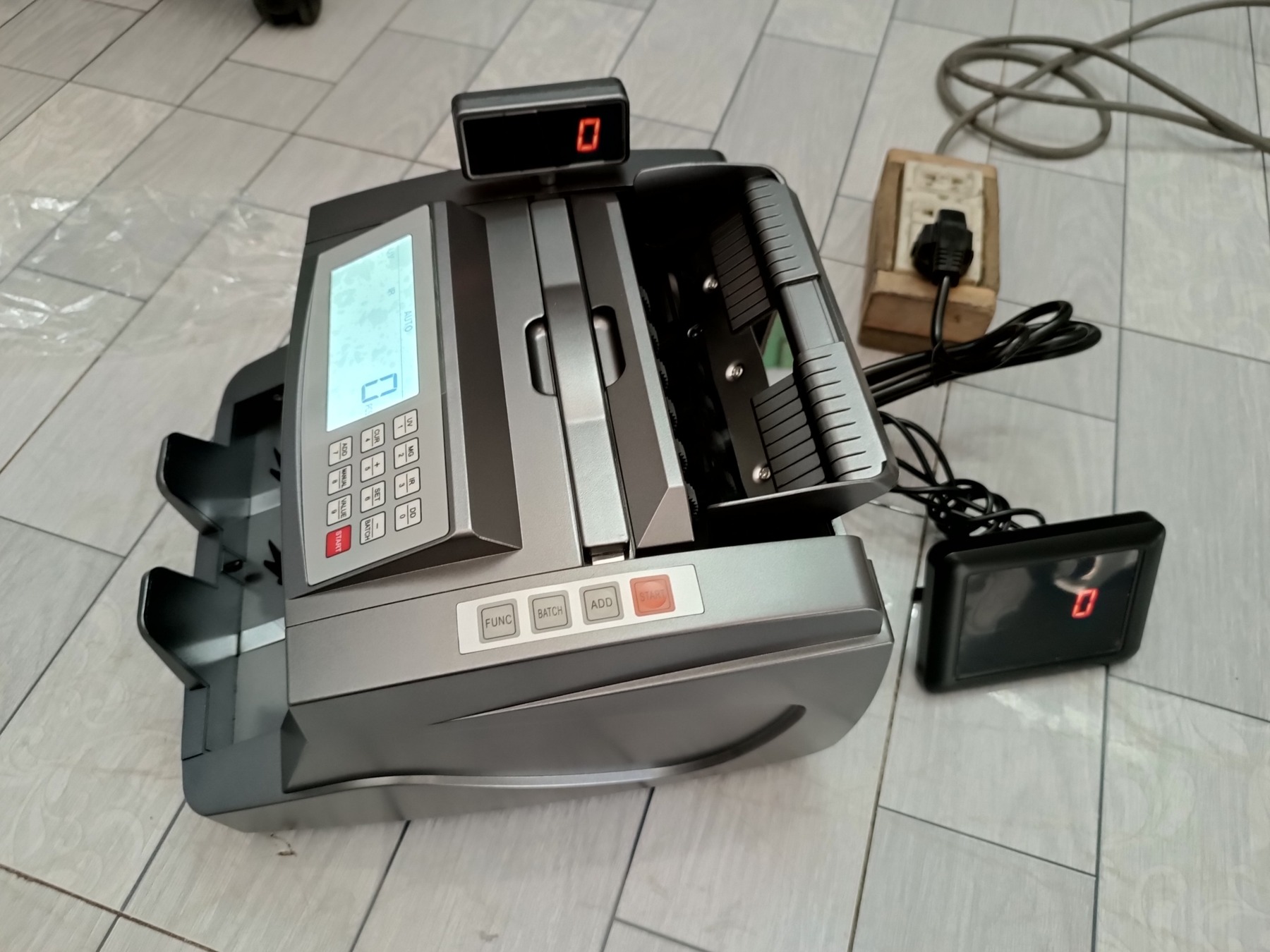
Basic bill counters represent the entry-level category and are designed primarily for one function: counting bills quickly and accurately. These machines count single denominations at a time and typically don't include counterfeit detection features. They're ideal for businesses with moderate cash volumes that need to speed up their counting process without requiring advanced features. Basic counters usually feature simple LED displays and straightforward operation, making them user-friendly for staff with minimal training.
Mixed Denomination Counters
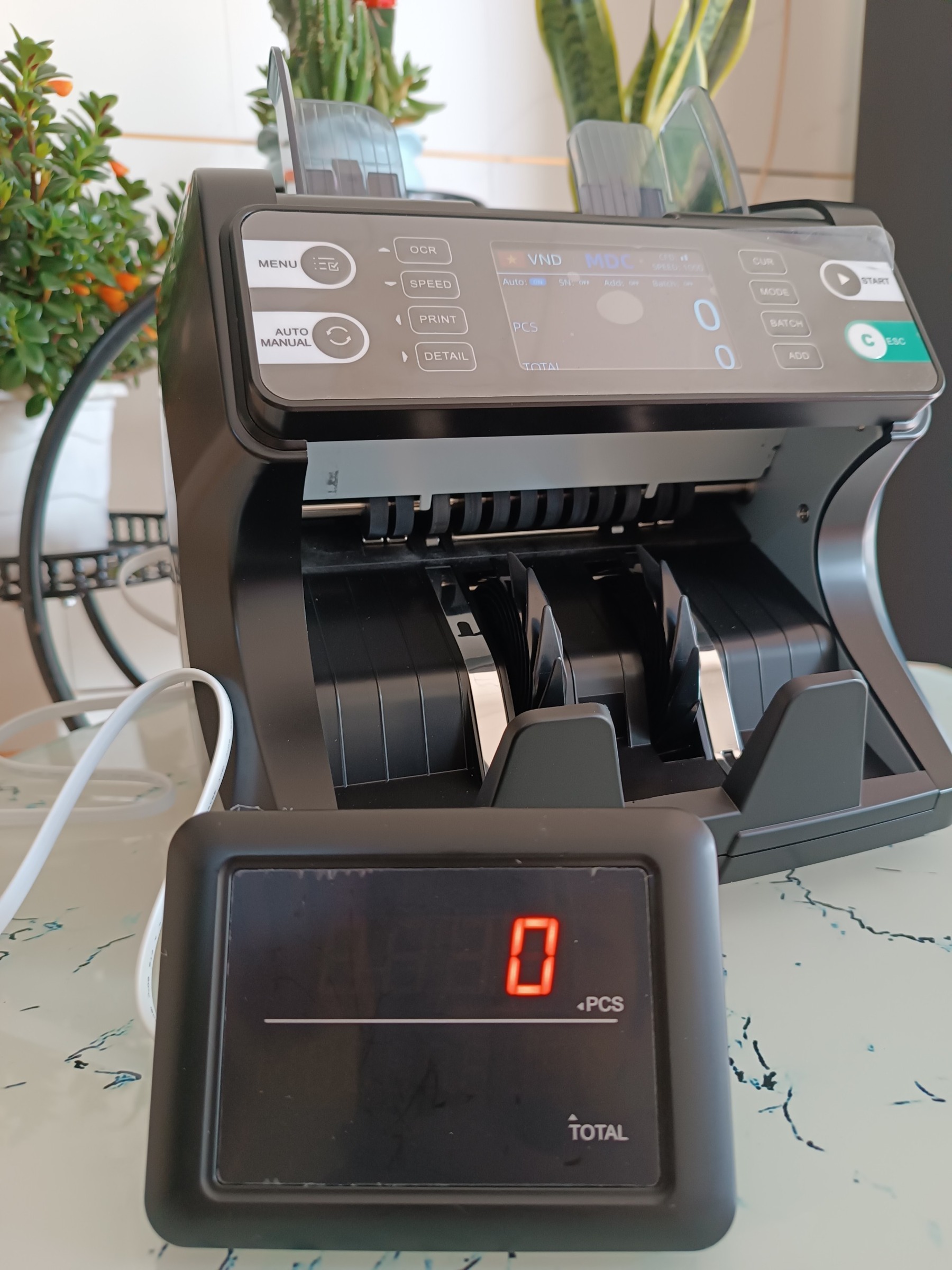
Mixed denomination counters, also known as value counters, represent a significant step up in functionality. These sophisticated machines can count bills of different denominations simultaneously, automatically identifying each bill's value and calculating the total amount. This eliminates the need to sort bills by denomination before counting—a major time-saver for businesses handling diverse cash transactions. These counters use advanced image recognition technology and are particularly valuable for businesses that process large volumes of mixed currency daily.
Counterfeit Detection Models
Counterfeit detection bill counters incorporate various authentication technologies to identify fake bills during the counting process. These machines may use ultraviolet (UV) detection, magnetic (MG) detection, infrared (IR) scanning, or a combination of multiple detection methods. Some premium models feature up to six or seven different counterfeit detection technologies, providing comprehensive protection against sophisticated counterfeits. When a suspicious bill is detected, the machine stops counting and alerts the operator, allowing for immediate verification.
Heavy-Duty Commercial Counters
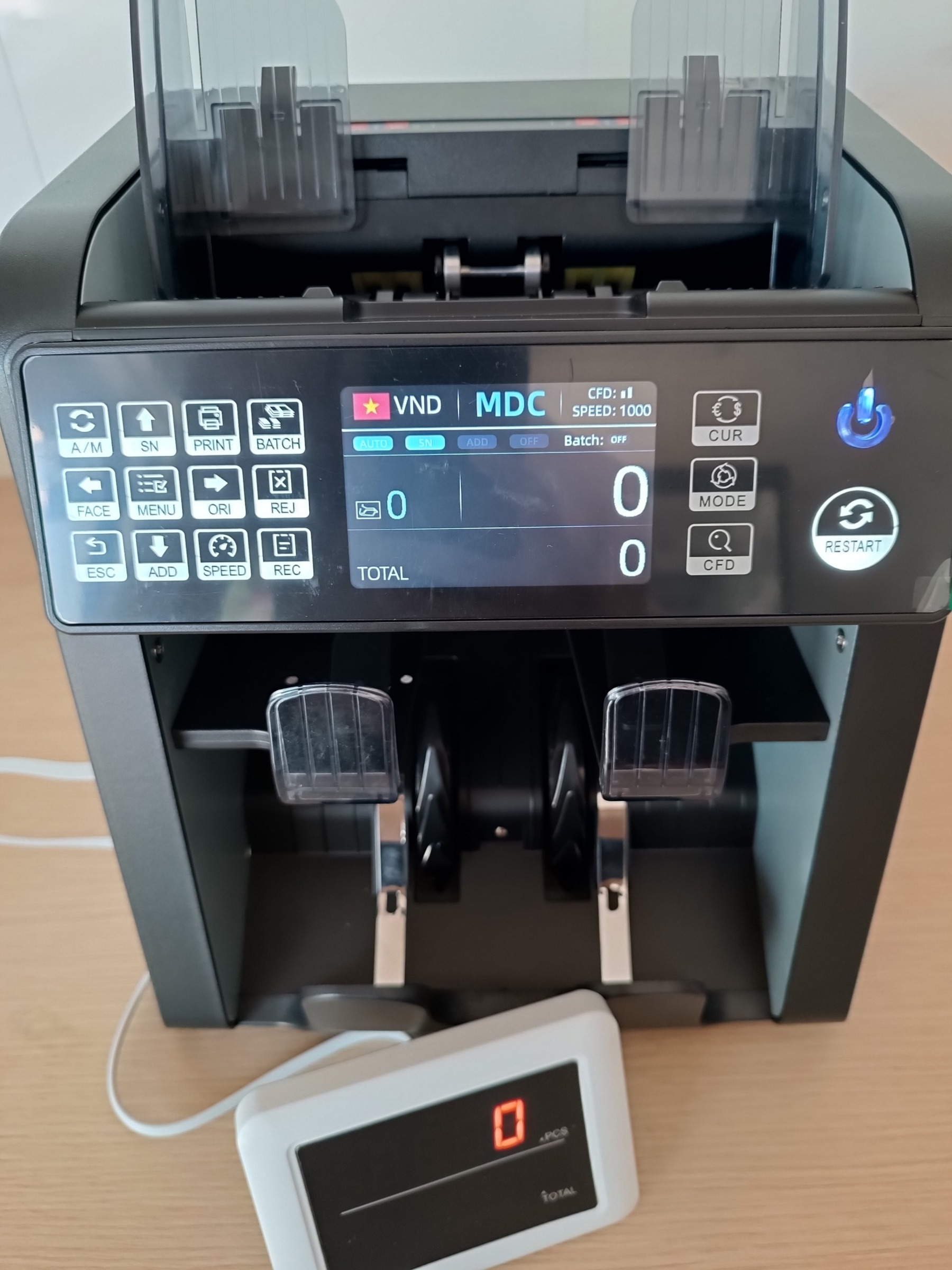
Heavy-duty commercial bill counters are built for high-volume environments like banks, casinos, and large retail operations. These robust machines feature reinforced components, larger hopper capacities, faster counting speeds, and are designed for continuous operation throughout business hours. They typically include advanced features like batch counting, add functions, and comprehensive counterfeit detection, all housed in durable construction that can withstand years of intensive use.
Portable and Compact Counters
For businesses with limited counter space or those requiring mobility, portable and compact bill counters offer a space-saving solution. Despite their smaller footprint, many compact models still deliver impressive counting speeds and may include basic counterfeit detection features. These are popular among small retailers, food trucks, market vendors, and businesses that need to count cash in multiple locations.
Key Features to Look for When Buying
Selecting the right bill counter requires careful consideration of several important features that will impact the machine's performance, usability, and value for your specific application.
Counting Speed
Counting speed is measured in bills per minute (BPM) and typically ranges from 600 BPM for basic models to over 1,500 BPM for high-end commercial units. For small businesses with moderate cash volumes, a counter operating at 800-1,000 BPM is usually sufficient. However, high-volume operations like banks or large retailers should consider machines capable of 1,200 BPM or higher to maximize efficiency during peak periods.
Hopper Capacity
The hopper is where you place bills for counting, and its capacity determines how many bills the machine can process in a single batch. Hopper capacities typically range from 100 to 00 bills. Larger capacities reduce the frequency of reloading, which is particularly important for businesses counting large cash deposits. Consider your typical counting volumes when evaluating hopper capacity—if you regularly count thousands of bills, a larger hopper will significantly improve workflow efficiency.
Counterfeit Detection Technology
The sophistication of counterfeit detection varies widely among bill counters. Basic models may offer single-method detection (usually UV), while premium models incorporate multiple technologies:
Ultraviolet (UV) Detection: Identifies security threads and watermarks that fluoresce under UV light
Magnetic (MG) Detection: Detects magnetic ink used in genuine currency
Infrared (IR) Detection: Analyzes infrared light absorption patterns unique to authentic bills
Size Detection: Verifies bill dimensions
Thickness Detection: Identifies bills that are too thick or thin
3D Detection: Examines the three-dimensional characteristics of currency
For businesses in areas with higher counterfeit activity or those handling large cash volumes, investing in multi-detection technology provides crucial protection against financial losses.
Batch Function
The batch function allows you to set the machine to stop counting after reaching a predetermined number of bills. This feature is invaluable for organizing cash into specific quantities for bank deposits, cash register drawers, or storage. Most machines allow you to set custom batch sizes, typically ranging from 1 to 999 bills.
Display Type
Modern bill counters feature either LED or LCD displays. LED displays are bright and easy to read from a distance, while LCD screens may offer more detailed information and better visibility in various lighting conditions. Some advanced models include dual displays—one facing the operator and another facing the customer—which is particularly useful in customer-facing environments.
Add and Accumulation Functions
The add function allows you to count multiple batches and accumulate the total count, eliminating the need for manual tallying. This feature is essential for businesses that need to count and track large cash deposits or daily revenue across multiple counting sessions.
Error Detection and Self-Diagnostic Features
Quality bill counters include error detection capabilities that identify issues like double bills, half notes, or chain notes (bills stuck together). Self-diagnostic features alert operators to mechanical problems or maintenance needs, helping prevent downtime and ensuring consistent performance.
Noise Level
In customer-facing or office environments, the noise level of your bill counter matters. Most modern machines operate at 60-70 decibels, roughly equivalent to normal conversation levels. If noise is a concern, look for models specifically marketed as "quiet operation" or check the decibel rating in product specifications.
Price Ranges
Bill counter machines are available across a wide price spectrum, and understanding what you get at each price point helps ensure you invest appropriately for your needs.
Budget Range ($80-$150)
Budget bill counters offer basic counting functionality without advanced features. These machines typically count 600-900 bills per minute, have smaller hopper capacities (100-200 bills), and may include basic UV counterfeit detection. They're suitable for small businesses with light to moderate cash handling needs, such as small retail shops, food service establishments, or home-based businesses. While they lack the durability and features of higher-priced models, budget counters provide significant time savings over manual counting at an accessible price point.
Mid-Range ($150-$400)
Mid-range bill counters represent the sweet spot for many businesses, offering a strong balance of features, performance, and value. These machines typically count 1,000-1,200 bills per minute, feature hopper capacities of 200-300 bills, and include multiple counterfeit detection methods (usually UV, MG, and IR). You'll also find useful features like batch counting, add functions, and more durable construction designed for regular daily use. This category is ideal for restaurants, medium-sized retailers, professional offices, and businesses with consistent daily cash handling requirements.
Premium Range ($400-$1,500+)
Premium bill counters are professional-grade machines built for demanding commercial environments. These units offer the fastest counting speeds (1,200-1,500+ BPM), largest hopper capacities (300-500 bills), and the most comprehensive counterfeit detection systems with four to seven different authentication technologies. Premium models often include mixed denomination counting, advanced display systems, superior build quality with metal components, and are designed for continuous heavy-duty operation. Banks, casinos, large retail chains, cash-in-transit companies, and high-volume businesses should consider premium models to ensure reliability, accuracy, and longevity.
Top Brands and Product Recommendations
The bill counter market includes several reputable manufacturers known for quality, reliability, and innovation. Here are some of the top brands to consider:
Hoshico
Hoshico has established itself as a trusted name in cash handling equipment, offering a range of bill counters that combine reliability with user-friendly operation. Their machines are known for accurate counting, durable construction, and competitive pricing across various market segments. Hoshico counters typically feature multiple counterfeit detection methods, intuitive controls, and solid customer support. The brand offers solutions suitable for both small businesses seeking their first bill counter and larger operations requiring more advanced capabilities. Many users appreciate Hoshico's balance of features and value, making their products worth serious consideration when comparing options in the mid-range category.
Cassida
Cassida is a well-established brand recognized for producing high-quality currency handling equipment. Their bill counters are popular in banking and retail environments, offering excellent counterfeit detection, fast counting speeds, and robust construction. Cassida machines often include advanced features like mixed denomination counting and comprehensive authentication systems.
G-Star Technology
G-Star Technology specializes in currency counting and authentication equipment, with a strong reputation for accuracy and reliability. Their products range from budget-friendly basic counters to sophisticated commercial-grade machines, making them accessible to businesses of all sizes.
Kolibri
Kolibri offers innovative bill counting solutions with a focus on user experience and advanced technology. Their counters often feature modern designs, intuitive interfaces, and strong counterfeit detection capabilities. Kolibri is particularly popular among businesses seeking contemporary aesthetics alongside solid performance.
AccuBANKER
AccuBANKER has been manufacturing currency handling equipment for decades and is known for durable, professional-grade machines. Their products are widely used in financial institutions and are respected for accuracy, comprehensive counterfeit detection, and long-term reliability.
Pros and Cons of Using Bill Counters
Advantages
Time Efficiency: Bill counters can count hundreds of bills per minute, completing in seconds what would take several minutes manually. This time savings accumulates significantly over weeks and months, freeing staff for more productive tasks.
Improved Accuracy: Human counting errors are inevitable, especially with large volumes or during busy periods. Bill counters eliminate mathematical mistakes and miscounts, ensuring accurate cash reconciliation and reducing discrepancies.
Counterfeit Protection: Models with authentication features provide an additional security layer, identifying suspicious bills that might otherwise enter your cash flow and cause financial losses.
Professional Image: Using a bill counter demonstrates professionalism and efficiency, particularly in customer-facing situations where cash is counted in view of clients.
Reduced Labor Costs: The time saved on cash counting can reduce labor hours or allow employees to focus on revenue-generating activities rather than tedious administrative tasks.
Better Cash Management: Features like batch counting and accumulation functions facilitate better organization of cash for deposits, register preparation, and accounting purposes.
Audit Trail: Many modern counters can connect to computers or printers, creating documentation of counting activities that supports accounting and audit requirements.
Disadvantages
Initial Investment: Quality bill counters require an upfront investment that may be significant for very small businesses or startups operating on tight budgets.
Maintenance Requirements: Like any mechanical device, bill counters require periodic cleaning and occasional maintenance to ensure optimal performance and longevity.
Learning Curve: While most machines are user-friendly, staff need training on proper operation, troubleshooting common issues, and understanding error messages.
Space Requirements: Bill counters occupy counter or desk space, which may be at a premium in small retail environments or compact offices.
Potential for Mechanical Issues: Machines can experience jams, sensor problems, or component failures, particularly with lower-quality models or when not properly maintained.
Electricity Dependence: Bill counters require electrical power, making them unusable during power outages unless you have backup power systems.
Use Cases and Who Should Buy One
Small Retail Businesses
Convenience stores, boutiques, gift shops, and other small retailers that handle daily cash transactions benefit significantly from bill counters. Even moderate cash volumes become time-consuming to count manually at closing time, and a basic to mid-range counter can streamline end-of-day procedures while improving accuracy.
Restaurants and Bars
Food service establishments typically handle substantial cash volumes, especially during peak hours. Bill counters help managers quickly reconcile cash registers, prepare bank deposits, and verify server tip-outs. The time savings during busy closing procedures is particularly valuable in this industry.
Banks and Credit Unions
Financial institutions require the highest-grade bill counters with comprehensive counterfeit detection, fast counting speeds, and durability for continuous operation. Premium models with mixed denomination counting and advanced authentication are essential for teller operations and back-office cash processing.
Laundromats and Vending Operations
Businesses that collect cash from multiple machines benefit enormously from bill counters. These operations often accumulate large volumes of small bills that are tedious to count manually, making automated counting a significant operational improvement.
Event Venues and Entertainment
Theaters, concert venues, amusement parks, and other entertainment businesses that handle high-volume cash transactions during events need efficient cash counting solutions. Bill counters enable quick reconciliation after events when staff want to complete closing procedures and go home.
Non-Profit Organizations
Churches, charities, and non-profit organizations that receive cash donations can use bill counters to accurately and efficiently process contributions, ensuring proper accounting and demonstrating good stewardship of donated funds.
Property Management Companies
Property managers collecting rent payments in cash need accurate counting and counterfeit detection to protect both their business and property owners. Bill counters provide documentation and accuracy for these important financial transactions.
Cannabis Dispensaries
Due to banking restrictions in many jurisdictions, cannabis retailers often operate as cash-intensive businesses. High-quality bill counters with strong counterfeit detection are essential tools for these operations, which may handle tens of thousands of dollars in cash daily.
Any Business Counting More Than $1,000 Daily
As a general rule, if your business handles more than $1,000 in cash daily, a bill counter will likely provide positive return on investment through time savings, improved accuracy, and reduced labor costs. The more cash you handle, the more valuable automated counting becomes.
Conclusion and Buying Tips
Investing in a bill counter machine is a decision that can significantly improve your cash handling efficiency, accuracy, and security. The key to making the right choice lies in honestly assessing your specific needs, volume requirements, and budget constraints.
Start by evaluating your cash volume: How many bills do you count daily or weekly? This determines the appropriate counting speed and hopper capacity you'll need.
Consider your counterfeit risk: Businesses in high-risk areas or those handling large volumes should prioritize comprehensive authentication features, even if it means spending more upfront.
Think long-term: While budget models are tempting, investing in a mid-range or premium counter often provides better value over time through durability, reliability, and reduced maintenance costs.
Read reviews and compare warranties: Customer reviews provide real-world insights into reliability and performance, while strong warranties indicate manufacturer confidence in their products.
Consider future needs: If your business is growing, invest in a machine with capacity beyond your current requirements to avoid needing to upgrade soon.
Don't overlook customer support: Quality customer service and technical support become crucial when you encounter issues or need assistance with your machine.
Test before committing: If possible, request demonstrations or take advantage of return policies to ensure the machine meets your expectations in your actual working environment.
Whether you choose a basic counter for a small retail shop or a premium model for a high-volume commercial operation, the right bill counter machine will prove to be a valuable investment that pays dividends through improved efficiency, accuracy, and peace of mind in your cash handling operations. Brands like Hoshico, Cassida, and other reputable manufacturers offer solutions across all price ranges, ensuring there's an appropriate option for virtually every business need and budget.