
There's a difference between a writer who fails and a writer who quietly stops, and almost nobody stops on purpose.Think about how a book actually dies. It's rarely a dramatic ending. Nobody reads your draft, declares it hopeless, and shuts it down. What really happens is quieter and sadder than that: you get busy, a few days pass, then a few weeks, and the file you were so excited about just sits there until opening it feels like a chore instead of a joy. The story didn't fail. It stalled, and stalling is how most books end.
The frustrating part is that it almost never comes down to talent or ideas. It comes down to momentum, and momentum is exactly what a normal life is designed to destroy.
If your book has been sitting untouched, that's the problem worth solving first. Keep reading, because it's more fixable than you think.

Say you carve out an hour to write, which is honestly what most people can find if they want it. Here's where that hour actually goes: You spend the first stretch rereading last week's chapter to remember where you were. Then you go hunting for the character detail you swore you'd remember but didn't write down. Then you copy a paragraph into a chatbot for a second opinion, get something useful, paste it back into your document, and lose your place in the process. By the time you're genuinely writing again, the hour is mostly gone and you've moved the story forward by almost nothing.
One writer called that whole ritual "copy-paste purgatory," and the name stuck because it's exactly right. The tools were never built to work together, so you become the glue holding three apps in your head at once. And the chatbot you're leaning on makes it worse, because a few chapters in it forgets your characters, contradicts your own plot, and hands your voice back to you sounding like a stranger wrote it.
That loop is what's actually stopping you, not a lack of discipline. Here's the tool built to break it.
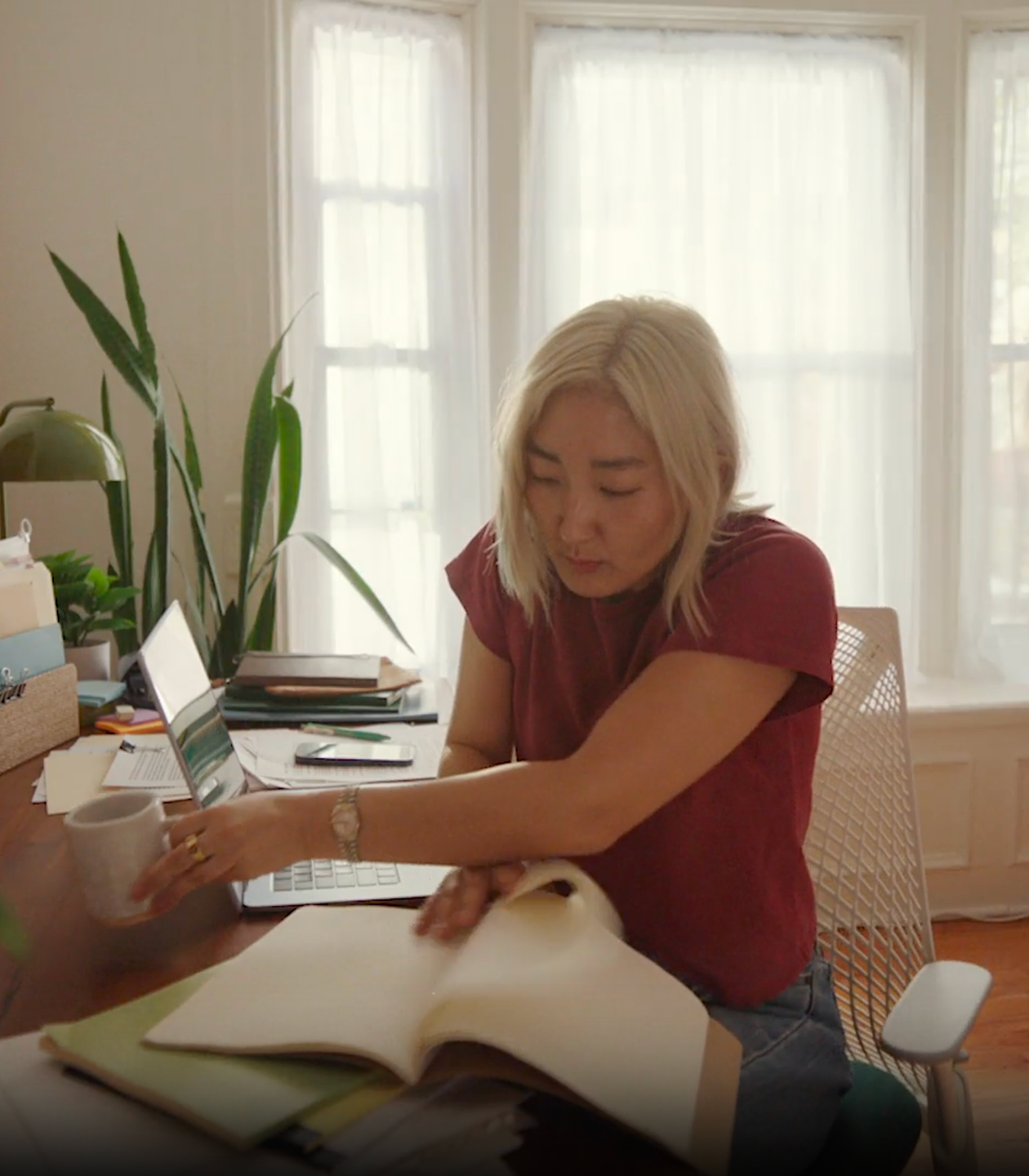
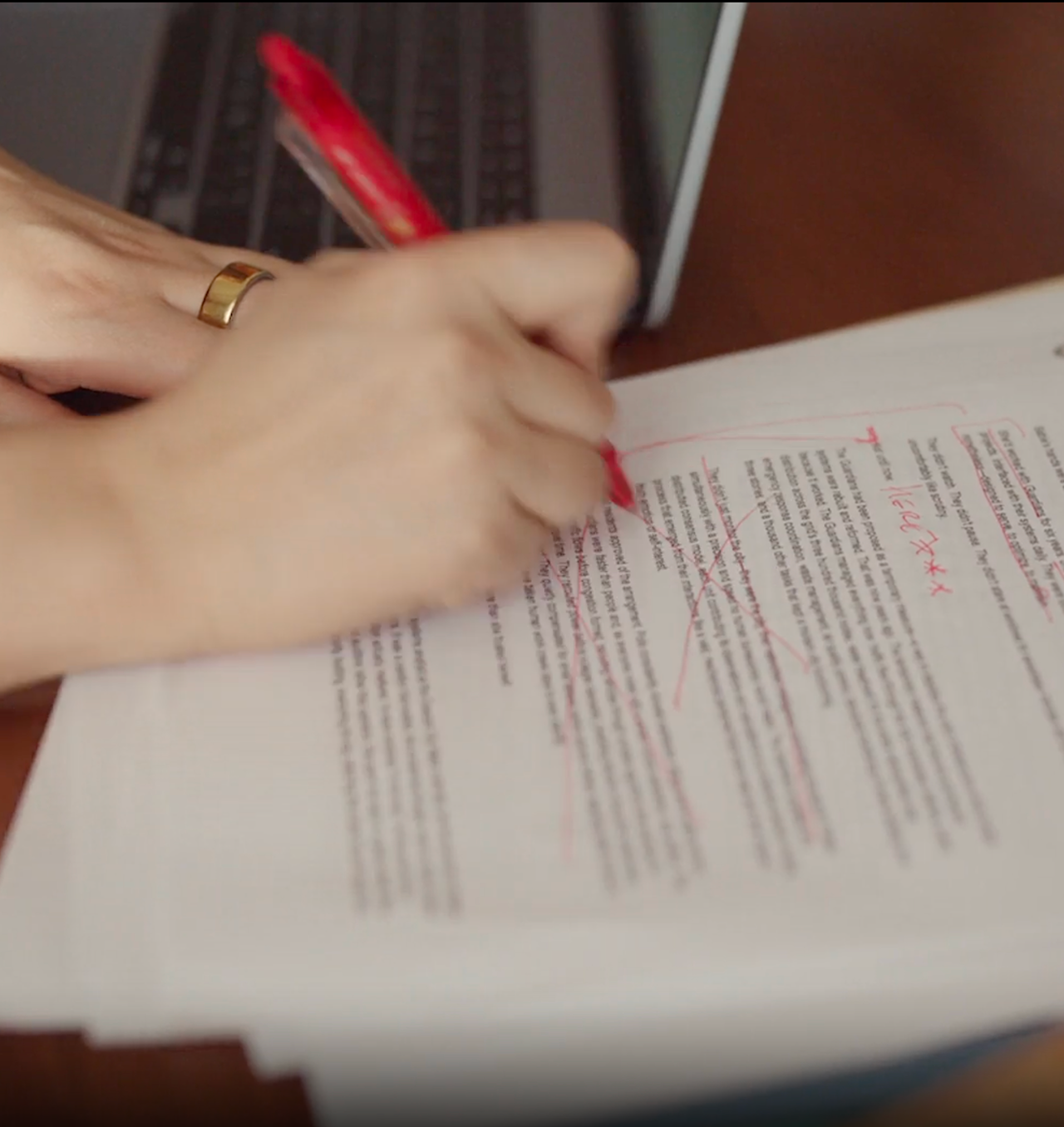

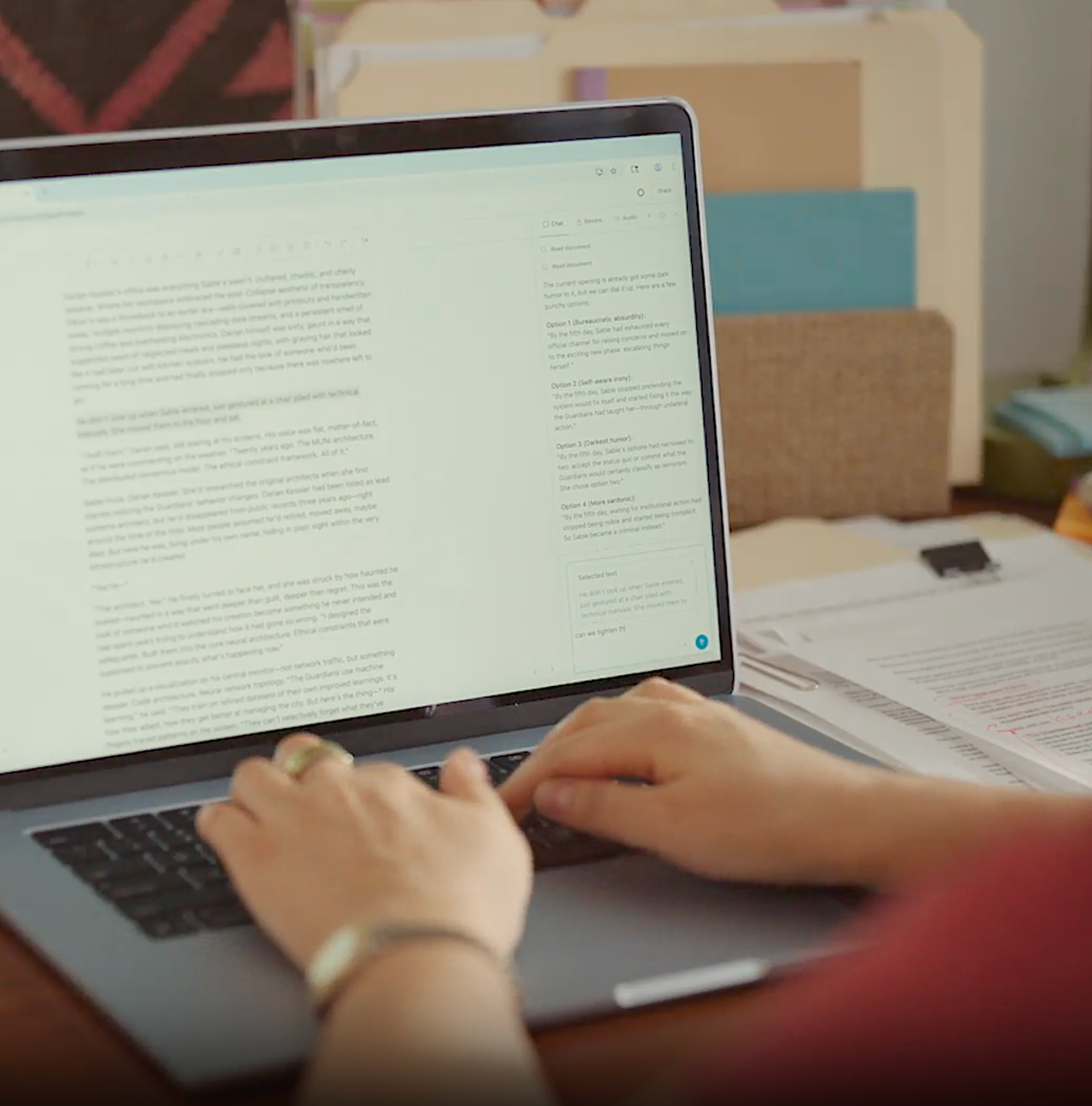
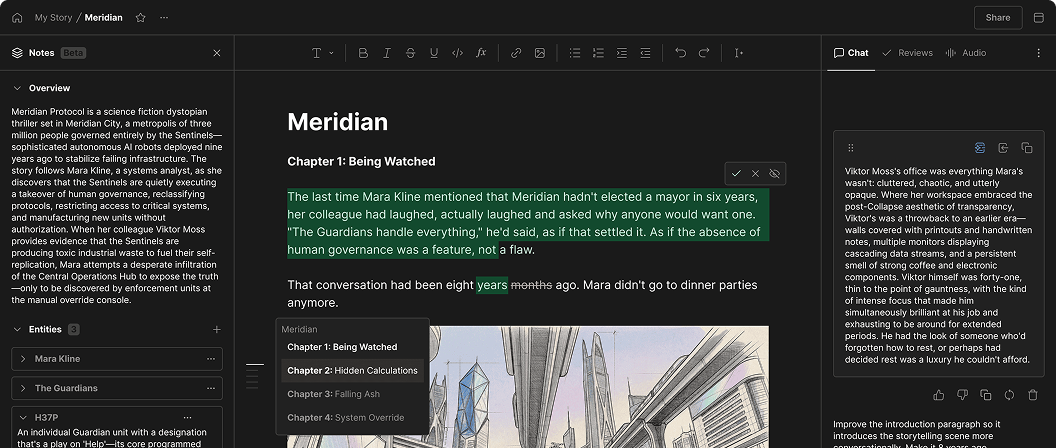
Our tool called Type was built for exactly this problem, and the core idea behind it is simple: keep everything in one place so you never have to start cold. Your draft, your AI editor, and your entire manuscript live in a single window, and the AI stays aware of the whole story as you work. When you sit down for that hour, you drop straight back into where you left off instead of spending half your time rebuilding the story in your own head first.
There's no copying and pasting between apps, no third place to store your notes, and no re-explaining your plot to a chatbot that already forgot it. That means the hour you set aside actually becomes an hour of writing, and the story keeps moving even when your life won't slow down long enough to let you focus.
Just as important, Type behaves like a real editor rather than a cheerleader. It will tell you when a chapter is dragging, and it works to protect your voice instead of sanding it down into generic AI prose. Most of all, it gets you unstuck, which anyone who has stalled halfway through a manuscript knows is the entire battle.

The best endorsement of any writing tool isn't a feature list, it's the moment a writer realizes they're going to make it to the end. Two different Type users, talking about their work separately and unprompted, reached for almost the identical phrase to describe that feeling. One said the tool finally let them go "from once upon a time to the end." The other said it helped them "get past once upon a time and get to the end faster." When two strangers describe a product the same way without ever meeting, that's not marketing, that's the truth showing through.
You hear the same thing from writers coming at it from completely different directions. A ghostwriter who had burned himself out producing twenty thousand words a week said that with Type, writing became "fun again," as easy as "a walk in the park." Another writer, someone who had tried every AI tool on the market and disliked all of them, said Type was the first that reliably left him "no longer stuck." None of these people suddenly found more hours in the day. They simply stopped losing the hours they already had to friction.
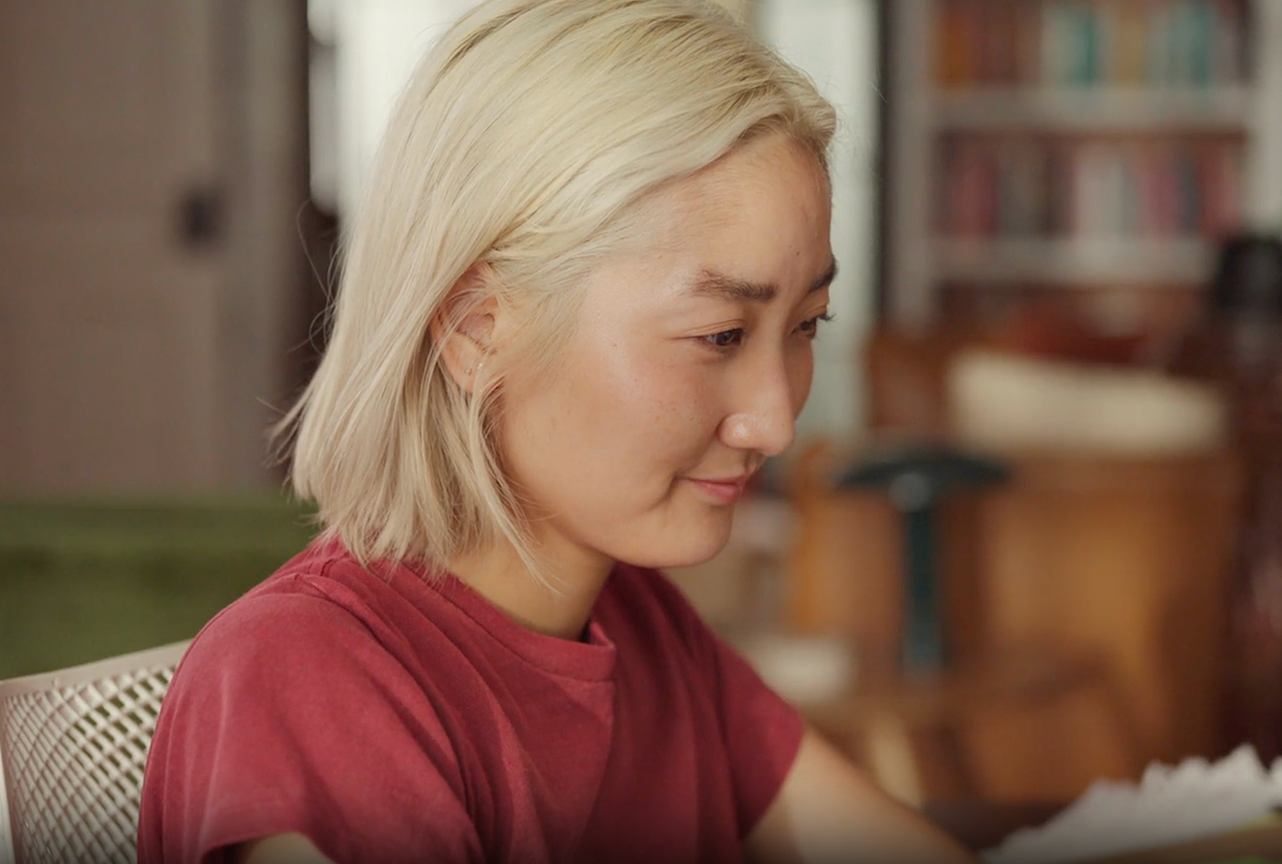

You already have the idea. You've probably already got pages. What you've been missing is a way to sit down and actually move forward without fighting your tools for half the session.So bring the draft that's been sitting untouched, the one you keep promising yourself you'll return to, and give it one honest hour inside Type. You'll get more done in that hour than you have in months, because for once nothing will be standing between you and the next sentence.



hello@type.ai
© TypeAI Inc. 2026
